Last year I clicked on a Twitter link (twink?) from Danny Stack that introduced me to the wonderful world of Julie Gray.
Monday, May 23, 2011
SUBTEXT & FRUIT
Friday, February 25, 2011
INTELLECTUAL IMPROPRIETY?
Reading Lucy’s great post the other day reminded me of an article I wrote for Scriptwriter Magazine a few years ago, inspired by the myth of ideas theft.
Motivation for screenwriting wasn’t immediately obvious to me. It would be easy to say I always wanted to tell stories to entertain people, but in truth that’s a predictably lazy piece of twaddle, and, certainly in my case, wouldn’t be the truth on its own.
The obvious motivations exist for me as they do for all writers. Orwell said it more eloquently, but it’s basically a very healthy dose of ego, combined with the pleasure of storytelling, the urge to uncover facts and truths, and a driven, almost self-righteous desire to expose injustice - all traits shared by all writers (don’t let them tell you any different); it’s just the proportions that differ, dependent on the writer’s state of mind at the time and the subject matter.
I’ve always had stories floating around my head. Actually, part of my problem is they don’t float at all, they wear cricket spikes and barbed-wire gloves and take lots of ecstasy and I’ve been forced to experiment with various ways of extracting them, or at least calming them down. Screenwriting appears to work as a way to get them out of my head and stop their bad dancing. Either that or I have to anesthetize my brain to such an extent that they appear to go away, which, although often a popular choice, is a bit like removing the flashing oil light on a dashboard because it’s becoming annoying - at some point you’ll need to take a bus.
I’ve been taking a lot of buses lately.
A while back I read in The Hollywood Reporter that a film addressing climate change was in pre-production. That wasn’t a good day, week or month for me. The Day After Tomorrow - a high-concept exploration of the effect of global-warming on a deluded population. Oh bollocks…
![]()
I’ve never been a naturally paranoid person, but I knew right then I’d been cyber-burgled. I've got pages and pages of research, treatments and character bios to prove it. The first draft was only a week away. Well, maybe a month away. Actually, thinking about what time of year it was, and taking into consideration my work commitments and a wealth of other thinking projects, along with my continued financial obligation to several local bartenders, plus all those bus journeys, I probably would have got round to nailing the first draft in about, oh, I don't know, a year or so? Maybe.
And there it was, my motivational epiphany: Get Stuff Done.
Ideas are everywhere, but until someone knuckles down and turns one of them into a viable script, they are worthless, hence the oft-repeated mantra about why there exists no copyright on ideas, just the manifestation of those ideas into scripts. This motivational epiphany extended to the knowledge that every single great idea I come up with - no matter how unbelievably unique and utterly brilliant I know I am - there will always be people the world over toying with a similar idea (just nowhere near as good) and maybe some of them are already working on treatments, maybe some have already completed drafts, and just maybe… uh oh…
It’s the most natural thing for storytellers to share a common currency of thought. Imagine a busy street with hundreds of people walking along it every day. Add something of interest in that street that draws attention and could inspire a story. Throw in a couple of screenwriters walking down that same street at different times, and they’ll be the ones most likely sucked into imagining the story behind it and the possibilities that story could inspire. In the same way that out of all those hundreds of people it will be the few photographers walking down that street who will focus on something else and be inspired in a different way, seeing hidden possibilities that most people walking past wouldn’t, and which crucially they feel are unique to them. And so it goes. Hence it really shouldn’t be a surprise when we screenwriters come up with similar ideas at similar times.
Sometimes, though, it is cyber-burglary, but I’m not going to dwell on that, even if it was by a successful German writer-director with an impressive list of films under his belt and possibly a bigger cock than mine. I’m over it. I’ve moved on. I’M FINE.
So, it’s quite simple. There are endless stories out there with varying basic motivations for telling them, but my immediate motivation lies in writing them before some other fucker does and I get my nose rubbed in it by The Hollywood Reporter. And you know what? It seems to be working. It’s helping me to get stuff done.
However, I do have another motivation that started long before I began writing for the screen, and it’s just as inspirational. I want my mum and dad to live in a big house by the sea and never have to worry about getting stuff done. That one helps when the bus journeys get longer.
Published in Scriptwriter Magazine, September 2006.
Tuesday, September 21, 2010
A Beautifully Crafted Work Of Art
![]()
En La Ciudad De Sylvia, by José Luis Guerín, is a film pretty much devoid of dialogue, plot and any urgency whatsoever, about a man whose raison d'être seems to be pursuing the life of a stalker. It is also one of the most compelling and captivating films I have seen in a long time, and is beautiful in almost every single way. How it looks, sounds, feels, the silences, the space, the actors, the story (what there is of it), everything is sublimely beautiful. Be warned, though: you have to put in what you expect to get out, as this film is certainly not the territory of the easily distracted or the manic household.
The film opens with the nameless protagonist (played by the striking French actor Xavier Lafitte) sitting unmoving and silent in his room. We watch him thinking, yet with nothing to go on we have no idea what might be on his mind, and we stay with him for what seems an age until he is finally moved to scribble something into his sketchbook. It couldn’t be further removed from the scriptwriting maxim of "hit the ground running", but it sucked me in and set the tone perfectly for how this gentle film calmly unfolds.
Lafitte’s character remains a mystery throughout. We discover nothing about him, other than he’s good at sketching and he’s searching for a girl. He spends much of his time trying to recreate the girl’s image in his sketchbook, but the sense here is that he remembers the feeling of her more than any specific detail. As he sits outside a busy café, he watches, and occasionally sketches, many of the surrounding women. Some are dining, some sharing coffee, others simply passing by, and each glimpse of someone new seems to set his heart racing as if she could be the one. (I've been searching for a café like this all my life.)
It is a truly remarkable and powerful scene, with each new face bringing real hope and drama. As the scene plays out, the camera settles into a relaxed voyeuristic rhythm of watching these strangers’ everyday lives, moving from one face to the next, then returning to the first. As these faces become more familiar to us, personalities slowly begin to unravel, offering little glimpses of stories, guessed relationships, happiness, maybe tragedy, all gently revealed through subtle character action, with an accompanying soundtrack of this bustling, vibrant city. It is an audio-visual masterclass, a fascinating scene, and one I would demand anyone study, no matter what side of the camera you aspire to.
Lafitte’s character does finally catch sight of a girl who, his reaction suggests, could be the elusive Sylvia (the equally stunning Spanish actress Pilar López de Ayala) and he leaps up and follows her on a journey through the cobblestone streets of this wonderful old city. She walks, he follows, and that’s it: yet this meandering stalking session through this ancient town makes fascinating viewing and gripped me more than most high-octane Hollywood chase sequences. This is real drama, yet is remarkably achieved without much happening at all, with very little plot and hardly anyone saying anything. Wonderful!
![]()
En La Ciudad De Sylvia is about the romance of memory and chasing those lost moments and chance encounters we’ve all had at some point in our lives. Maybe it was a conversation, a shared drink, or a silent coming together across a crowded room or train carriage, or even the momentary passing smile from a beautiful stranger - all brief but powerful moments wrapped up in the extraordinary excitement that comes with the blushing rush of embarrassment and elation when your heart suddenly leaps so violently you believe the surrounding world instantly knows your secret.
Love at first sight? Fate? Destiny? Although just a whisper in our lives, those moments leave an indelible mark on our memories that over time can develop into an exaggerated picture of lost opportunity, occasionally rearing up unannounced at the most unlikely of times or even deliberately recalled during melancholic moments. What if we had followed our heart that day? The mystique of these brief encounters is reinforced by our inaction, and gives fertile ground to imagine any number of wild and wonderful possibilities.
Most of us at some point in our lives have entertained and experienced the romantic notion that a specific other person exists, written in the stars, with whom it’s our destiny to meet and fall unconditionally in love with. Such fatalistic belief in predestined love reinforces all these near misses. What if she had been the one? What if that smile, that look, that gesture, belonged to the one person on this earth with whom I was fated to meet and love above all others?
The director José Luis Guerín used such an experience as the inspiration for En La Ciudad De Sylvia. As a young man on his travels he met a girl in a café in Strasbourg, spoke with her briefly, then they parted company. And that was it. But as the years passed he became so haunted with thoughts of that encounter, and what might have been, that he finally returned to the same café ten years later in the hope he might see her again.
Unfortunately for him he didn’t find her, but maybe that’s not such a bad thing. A decade spent re-imagining and fantasizing about what could have been would surely have engendered a romantic legend too great for the reality to live up to. Maybe. What Guerín did find on his return, though, was the inspiration to document that emotion in a remarkable and extremely brave film.
Will Self recently expressed disenchantment with the current state of film, proclaiming the art of movie making “definitely dead”! José Luis Guerín has thankfully proven that Will Self is a little premature in his evaluation. En La Ciudad De Sylvia is a beautifully crafted work of art by a master of the medium, and it reassuringly touched the heart of this hopeless romantic.
![]()
En La Ciudad De Sylvia
Monday, May 17, 2010
SERENDIPITY AT THE LONDON BOOK FAIR
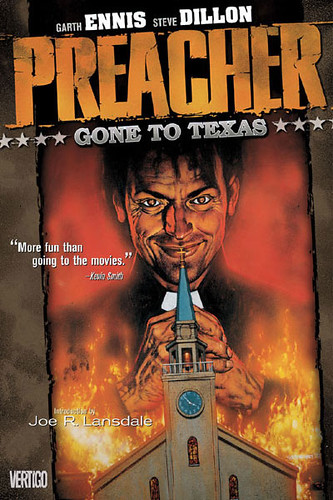
For a while now I have been vaguely contemplating adapting one of my specs into a graphic novel. I say “vaguely contemplating” in its loosest sense, pretty much the equivalent of a tortoise flirting with the idea of possibly entering the London Marathon before he gets too old. I’m not sure where the idea first came from, probably just evolved from countless industry-related stories absorbed over the years, certainly not born of any desire to emulate any graphic novels for the simple reason I’ve never owned or even read one* so I presume it’s just a case of head over heart.
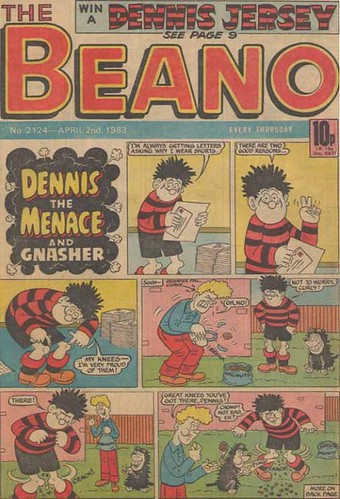
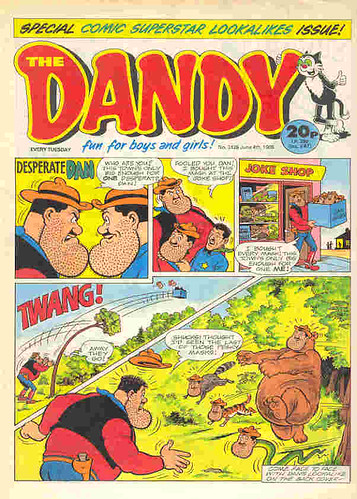
I loved traditional comics as a boy and religiously read The Beano and The Dandy, along with some ancient Marvel and DC comics handed down from a family friend (which are still in my parent’s house… mmm, aren’t those things worth stupid amounts of money now?) but as I erupted into my teens and began devouring novels as fast as I could lay my hands on them, comics soon faded into the befuddled mist of childhood memory.
So, while attending the Selling To Hollywood panel discussion, it was with growing interest that I listened to Andy Briggs pushing the idea that graphic novels are definitely worth considering as a serious route to getting an original story picked up. It’s all well and good me thinking I already know that, but it’s an entirely different matter hearing someone enthusing about it as passionately as Andy. As I listened, my dormant vague contemplation rumbled slowly into life, like the stomach of that same tortoise awakening from hibernation, and it dawned on me that one of my specs not only fits Andy’s take on the current US market vogue for mega-bucks commercial projects, but also involves a character who could easily drive a graphic novel franchise. Cue light bulb moment...
![]()
That's me, that is. Looking at a lightbulb.
I hung around after the panel discussion and hijacked Andy for a quick chat. He was very friendly and offered some great advice and support, after which, armed with my new and less vague plan of action, I trotted downstairs into the expanse of exhibitors to seek out the graphic novel stands and investigate what is it about these famed man-comics that makes so many go geek at the knees.
After walking around for what seemed an eternity and failing to find anything that remotely resembled a graphic novel, despite walking past all the graphic novel stands several times the previous day, I opted to repair to the bar (a decision made much easier as I was passing it for the third time) and there set about my newest plan of finding a map of the exhibitors arena. Armed with directions from the friendly French barman, and a nerve-steadying beer(s) coursing through my veins, I set off in hot pursuit of my destiny.
![]()
A surprising development of considering this specific story existing outside the screenplay format is that I now sense a growing exciting possibility that this thrilling spec script could also give birth to a fantastic novel sans drawings. A tingle and glow rears up at the bifurcation of the novel. The future might still be bright, but maybe not so glossy, with no drawings and lots of words instead.
Wednesday, May 05, 2010
SELLING TO HOLLYWOOD: THE LONDON BOOK FAIR
![]()
“Fear and pity may certainly arise from spectacle, but they may also arise simply from the system of the facts itself. This is the procedure that matters most, one that reveals the better poet.” Aristotle
Monday, March 01, 2010
WORKING AT THE BBC - Part 3
Things you find at work on a BBC printer.
My employer pays more for the hire of a dog for a day than they pay me to do a day’s work.
To add insult to injury they even pay the dog’s travel expenses and I’ve got half as many legs as a dog. How is that fair?
I’m gonna get me a dog suit.
Then we’ll see who’s laughing.
Tuesday, February 23, 2010
BAFTA: from the page to the screen
Inspiration shouldn't be short in the world of screenwriting with last night's BAFTA results. The best film and the best short film were both directed by women, which is fantastic news, and two great scripts, Up In The Air and The Hurt Locker, deservedly won their respective awards, with the added thrill that the best original screenplay went to a script with a protagonist who (sshhhh, say it quietly...) doesn’t change. How many readers would return that script with well-rehearsed notes demanding more character arc, more resolution, more depth, more... insert guru quote here... further proof that if you write something that damn well the truth will always be more powerful than the idea. In keeping with that, an honorable mention goes to the stunning Un Prophète for winning the Best Foreign Language Film with a story that contained a mesmerising protagonist with hardly any back story or character exposition. Superb.
The two best actor wins may also be something worth thinking about. At the time of reading them I remember feeling that both scripts (An Education and A Single Man) were similar in being so basic in their execution I wondered how they would be received in the hands of the right actor. They felt like blueprints in the truest sense, nothing exciting as written but everything laid out clearly giving the actors free reign and space to do what they do best. Whether that was a conscious decision or a stylistic choice, who knows, but it certainly paid dividends for those actors, and it’s certainly arguable as to whether that’s exactly what a screenplay should be: no embellishments whatsoever, just a basic template to inspire others to work their magic.
My gut feeling on reading them centered on the main character roles, and although there were elements of both scripts that didn’t quite click for me, I genuinely felt excited at the potential for those main roles, especially in An Education, as it read as such a rare and great opportunity for a young female actress. What struck a chord with me (as someone who is moved very easily by writing) is that I didn’t *feel* either script and thought there was a distinct lack of emotion, more so in An Education, but both scripts have been bugging me since reading them, and the subsequent BAFTA wins got me thinking about them and about my own writing and this confusing discipline as a whole.
There are so many obstacles to getting your script produced, but writing such an appealing lead part can only increase the chances of a great actor championing your cause, even if the narrative is a bit creaky or slightly lacking in places, and even if the overall effect of reading the script isn’t particularly emotionally gripping. Just because I didn’t feel emotion from the page doesn’t mean some wonderful actor won’t then reduce me to tears with their interpretation. So what was it about those two characters that laid the groundwork for two storming award-winning performances?
They are both iconic figures. They are both very representative of their time and place in history. A desperately lonely gay man in a repressed 60s society and a confused rebellious girl in a repressed 60s society. They aren’t just characters dropped into any old setting, they are characters that helped define their generation. Throw into the mix a few universal themes of love, loss, despair and humiliation, and it doesn’t get much bigger than that.
When characters step off the page and in front of a camera lens the magic kicks in. The power of film to communicate and provoke visually on such a primitive level is unrivalled by anything literature or theatre can offer, from camera angles, framing, editing, lighting, point of view, music, and is why most writers would benefit hugely from a greater understanding, awareness and confidence in the power of the camera to communicate through imagery, often in a way that reaches out to us at a subconscious level. Being constantly aware of that, and being able to write into our scripts that intangible magical something, is what separates the good from the great.
Shit. This doesn’t get any easier.
Thursday, December 31, 2009
The Day Of The Triffids: BBC Drama
Following on from last year’s remake of SURVIVORS this year’s dip into the BBC’s post-apocalyptic remake hat reveals an adaptation of John Wyndham’s The Day Of The Triffids (aka When Plants Attack!)
As a child I was a big fan of John Wyndham’s sci-fi books. My runaway favourite was The Midwich Cuckoos, but the Triffids still had the desired effect and scared the bejesus out of little me, and even once became an excuse for me leveling a patch of daffodils with a tennis racket. “Sorry mum,” I said, as I handed over my trusty yellow-stained Excalibur, “but you can’t be too careful these days.”
One obvious problem with adapting a book with such a fantastic premise is imagination over spectacle. Books leave the work of visualization to the reader - literature’s great storytellers excel at stimulating mental imagery with their words - but cinema spares the spectator such effort and instead packages up and spoon-feeds us someone else’s vision. They do the work for us, but at their own peril with adaptations, as what we imagine as fantastic or terrifying in a book can turn out to be, either by design or bad luck, ludicrous on screen. Especially if it’s a film about walking plants. The Ents worked in the Lord of the Rings because they belonged in a fantastic world populated by fantastic creatures with a fantastic budget, but DOTT presents itself the enormous challenge of being set in our normal world and because of this needs careful preparation if it hopes to suspend disbelief. In my opinion it failed from the off.
It opens with several staggering moments of whoosh bumping. The first being when the plant expert dude is stung by a plant (in a very contrived and highly implausible incident involving Spud from Trainspotting) at a factory that has been specifically designed and built to cultivate lots of dangerous plants that sting - yet for some reason they have no facility for dealing with, er, plant stings and so he has to be raced all the way to London to get the required medical attention from the plant sting experts who work, er, nowhere near the plants that sting. Right. Well, at least that gets the plant expert dude to London where he’ll soon be needed to do stuff, right after --
-- the much-anticipated solar flare! Which we are shown being watched in London, Paris, Sydney… er... eh? Sydney? Yes. Sydney! In fact all over the world in a variety of faraway places that surely wouldn’t be able to simultaneously see the sun rising on account of the small issue of the planet Earth blocking their view during that ancient phenomenon Galileo identified as bedtime. And even assuming the solar flare did flare all day, I’m thinking by the time it hit sunrise in London we would already know enough to put the shades on before breakfast.
CUT TO:
Meanwhile, 50,000 feet up in the clouds and unfazed by waking up in a plummeting plane surrounded by blind passengers, Eddie Izzard’s panto villain proceeds to calmly lock himself into the only plane toilet in existence that’s ever been vacant when needed and surround himself with half a dozen inflated lifejackets. The plane then falls out of the sky, crashes into London, explodes on impact, and when the smoke clears Eddie strolls out of the burning wreckage with a smug smile on his soot-stained face and the remains of a burst lifejacket clinging to his torn and smoking trousers. That scene inspired the kind of laughter commonly heard at Eddie’s stand-up shows and that was just from my cat. Maybe Arnie as The Terminator and an extra $100 million can carry off that kind of conceit, but a popular comedian in a TV drama about humans running away from plants?
BUT ANYWAY:
Our plant expert hero wakes in a hospital bed to discover a world where practically everyone has been struck down with Solar Stupidity Syndrome, a terrible affliction that would appear to inspire normal everyday folk, who have recently been suddenly blinded by a solar flash, to want to try and walk absolutely everywhere all the time in the hope that they can find a sighted person to kidnap. Right. Cue everyone bumping and crashing into each other and tripping over everything in sight (or not as the case may be). Would that really happen? Do people suddenly struck blind immediately try and walk everywhere? Constantly. All the time. Wouldn't you at least crawl, y'know, just for a bit, maybe see how that goes?
And why is everyone blind anyway? I accept that all those people staring at the sky at the time of the solar flash would have been struck blind, but what about all the other people who weren’t looking at the sky at the time, who were either asleep, otherwise engaged or simply not interested? As someone who has been a shift worker, I know full well there’s a whole other city out there that sleeps through the day ready to work through the night (which in itself would make a much more interesting premise: if the city’s lowly unseen workforce became the eyes of the city’s blinded leaders), which makes a mockery out of the mass blindness. Terminator Eddie wakes up on the doomed plane with his eyesight saved by a simple sleeping mask. If that’s all it takes then there would be millions of people also unaffected who were either asleep or just not near windows, huddled over computers glued to Twitter, not to mention the thousands of Londoners who would have been underground en route to work on the tube. How come the plant expert’s love interest, Jo, finds herself all alone in a deserted subway? Has anyone had the joy of traveling on London’s tubes lately?
All this painful whoosh bumping before we even get to the pièce de résistance, the stars of the show, the BBC’s very own shuffling pantomime trees, the triffids! Stumbling around like Steve Bell inspired purple-headed geriatric bishops making noises like cows eating apples. They looked ridiculous. I couldn’t help thinking the mass blindness simply saved everyone from pissing themselves laughing when they saw swathes of mildly psychotic rhubarb wobbling towards them.
“Ooooo, look, angry plants, coming this way. Quick, run!"
"Wait. Hang on. Are they coming this way?"
"Yes! Over there! Look! Run!"
"They've kind of been there for a while, though, haven't they."
"Have they?"
"Sort of just standing around."
"Oh."
"Are they even moving?"
"They’re swaying a bit. I think."
"Could be the wind."
"Yes, it has picked up a bit. Should have brought my cardigan."
"We can always grab a coffee and sit inside."
"That would be nice."
In a recent interview, the writer, Patrick Harbinson, explained how he tackled the problem of plants being plants and not being perceived as all that threatening. “Do the Jaws thing,” he said. “Hide them as long as you can.” Right. I get what you mean, Patrick, but here’s the thing. Sharks, whether you can see them or not, are already… prettyfuckingscary. We know what we’re getting with a shark, no matter how well hidden it is. A hungry plant somewhere in your back yard versus a hungry shark somewhere beneath your surfboard? I think the shark just shades that one. Mind you, I suppose I can understand the triffids being a tad coy and wanting to stay hidden for as long as possible. Being constantly mistaken for a giant turkey on roller-skates can’t be easy.
Why are the triffids attacking anyway? (I use the word attacking in its loosest sense). Are there no animals on this island to eat? Shouldn’t there be thousands, millions even, of blinded animals stumbling around bumping into each other practically begging to be eaten by these starving pansies? Or were they all on the tube with Jo? Or wearing welders’ masks? And on the flipside, why are the few remaining sighted humans desperately seeking out food supplies in stupid places immediately after this crisis has happened? They’re suddenly reduced to searching small London pubs for bar snacks when there must be thousands of supermarkets stocked with food that the majority of people have been unable to find because they’re too busy being blind and bumping into each other in the outside world.
It was just all too painful to take in. From little girls in quaint English villages carrying machine guns, to the plant expert dude killing a triffid with a candle (yes, he killed a triffid with a candle - just how dangerous can these things really be?), to people building walls to keep the triffids out even though they’re already surrounded by massive concrete walls on account of them being in London, to the constant flashbacks to Africa and the mask… the mask… the mask… okay we get it, the mask! Something about the mask! That ludicrous ending was risible. If we all wear eyeliner the triffids will leave us alone! No wonder Terminator Eddie threw in the towel. Mr. Guyliner himself discovers to his horror that he’s slap bang in the middle of a BBC production where everyone is suddenly wearing eyeliner except him. That’s gotta hurt.
The BBC’s 2009 production of The Day Of The Triffids was a real disappointment. It had so many problems with plot, continuity, reality and characterisation, many of which reeked of its previous post-apocalyptic effort and the purple pineapple-headed villains of the title were just not at all scary and gave off the unfortunate impression that an enthusiastic child with a tennis racket could lay waste to the lot of them in no time at all.
There was a moment towards the end when the plant expert dude opens the front door to what looks like a billowing snow storm, except he's not looking at snow flakes raining down, they’re spores, triffid spores, millions of them spreading over the countryside. He stands there open-mouthed as the shock registers, then looks to the sky and cries in horror, “The triffids are sporing!”
I couldn’t agree more. The triffids really are sboring.
Blinded By The Light
PS. I got stung by a triffid the other day. He wanted £20 for a jar of honey.
PPS. I apologise to the bees for stealing their joke.
Tuesday, November 03, 2009
Anyone Getting A Signal?
Anyone?
Jeez, buddy, who'd have thunk it? Looks like you're on the menu tonight!
Most of these films are horrors (quite literally) with their common genre themes of isolation and loneliness highlighting the cell phone’s beepingly buzzingly annoyingly omnipresence in our everyday lives, to the point that filmmakers now feel almost forced to justify their exclusion [as working phones] and subsequently compete to come up with increasingly ridiculous excuses and stupid things to say.
As ridiculous as these clips look when bundled together, I am intrigued by what this string of edited excuses say about our technologically driven existence. We are now more than ever reliant on gadgets and gizmos to help make things easier and get us out of trouble. Cell phones morph into detailed street maps of wherever we alight and talking boxes in cars ensure we’ll never do battle with stupidly folding maps again. It’s now becoming increasingly common to read amazing stories like this:
“Off the coast of Bali the boat had engine problems and they were stranded without any GPS or emergency radio. Rebecca sent a text message to her boyfriend in England, he called the Thames Coastguard, who called the Falmouth office, they called their counterparts in Australia, who contacted the Indonesian authorities via the embassy in Canberra and eventually an Indonesian Navy gunboat was dispatched from Lombok to look for the stricken tourists.”
All amazing, fascinating stories… unless of course you’re a seasoned horror flick writer, left wringing your hands in despair as each new cell phone story rears its heroic head in the news. Let’s face genre facts: isolation builds tension, and the reliance on ticking clock psychology, with death as a threat, flags up the phone issue much more regularly than in most other genres, and if we’ve now got people texting from lost boats in the Indian Ocean, texting from underneath rubble in earthquake-ravaged Indonesia, and texting from the dense jungles of Western Africa, what hope does any horror screenwriter have in justifying why his endangered charges simply don’t send a quick text and avert the impending mass slaughter that’s about to fill our screens for the next 40 minutes.
Of course, everyone knows there are plenty of places where we can’t get a phone signal – I can’t get one at my place of work, a place ironically most likely to be the setting for an epic slasher biopic real soon – but the problem is that these publicised rescue stories, combined with the leap-off-the-screen awkwardness of many cell phone caveats, just don’t sit well with an audience brought up to unconsciously adhere to the Aristotelian wisdom that a believable untruth is much easier to accept than an unbelievable truth. The cell phone 'problem' and subsequent excuse in contemporary horror has become a bit of an elephant in the script.
“We gotta be in some kind of sun spot or something, there’s no signal getting out!”
Forget not having a signal. The majority of times I need my cell phone for any length of time, no matter where I’ve gone, it’s more or less guaranteed I’ll have hardly any battery left, especially the further from home I am. Fact. The lack of useable cell phones in those film clips, at least the ones where the phones suddenly choke and die, is without doubt the most realistic part of any of those movies from my point of view. My phone is always dying on me when I’m out. My friends, thankfully, are not. But just because it happens in real life, it doesn’t stop it threatening to be a big stomping elephant, trumping away whenever the phone issue is raised. What to do?
The repeated issue with many of these films is the lack of creativity. We see time and again phones dying or being dropped at the very moment they’re most needed. In most cases, the filmmakers should flag the issue before the audience identifies it; place the get-out clause before the conflict and give the audience an answer before the problem appears. Hence the "No phones allowed on this trip!" as if by acknowledging it beforehand they’re saying to the audience, "You can't accuse us when we were the ones that flagged it before you even thought it!" It’s always better to know there are no bullets left in a gun than to find out when the gun goes click... click... dull ... and we’re left feeling cheated. Bring it forward, foreshadow, and use subtle plants and payoffs to at least give yourself a fighting chance.
Or maybe even remove them altogether. Is the problem with half of these cell phone issues the fact that they are even mentioned in the first place? Is the fact that the filmmakers highlight an issue that's common knowledge, yet having highlighted it they do nothing new or convincing with it? Is the pain of a terrible excuse – “Jesus, you’d think what I paid for this thing I’d get more than one bar service!” - any worse than the potential for a question left hanging over why they didn't have a phone?
I juggled with CPD (cell phone dilemma) in a thriller script that involved a situation in a jungle where medical assistance was needed. I opted to not even mention or involve cell phones and instead had characters head to a village they knew had a radio transmitter. It suited the plot, felt natural and I don't think the piece suffered because of it. Not one person who read it flagged it as an issue and my feeling is that if I had opted to write in some dramatic disclaimer as to why these guys couldn’t use their phones then I’m sure those same readers would probably have raised a knowing eyebrow at that point.
Cell phones are now such a part of everyday life that they increasingly put pressure on writers to explain them away, especially when their working presence, or lack of, is highlighted by an endangered or terrified character’s inability to reach out to those better placed to save them. How you overcome or address that problem in your own work is a combination of creativity, calculated risk and pot luck, but my fascination with this being an issue nowadays is that for all the serial killers and cannibals out there living in teen-friendly no-signal zones, the real monster highlighted in these film clips is the technology itself. The threat of everyday technology failing us, deserting us, leaving us stranded to the ravages of nature. That’s where the real horror lies... what happens when everything stops working?
Then again, what if all movies had cell phones? Bonjour?
Tuesday, June 16, 2009
Censorship
Welcome to the BBC, where the Thought Police are alive and kicking
The Writers’ Guild of Great Britain recently issued a press release following the BBC’s rejection of Caryl Churchill’s 'Seven Jewish Children', a play criticising Israel’s invasion of Gaza. Radio 4’s Commissioning Editor for Drama, Jeremy Howe, said that although he thought the play was a “brilliant piece” the BBC could not broadcast the play “on the grounds of impartiality”. Howe went onto to say, “It would be nearly impossible to run a drama that counters Caryl Churchill’s view.”
Somebody should have told Jeremy to break the pills in two. It’s utter lunacy that a commissioning editor for drama would read a piece of drama that he considers a “brilliant piece” and subsequently reject it on the grounds that he would need to find another piece of drama to offer a counter argument to justify the commission? Huh? Exactly what planet do I send my license fee to? How rare must it be for a drama commissioning editor to discover a piece of drama they actually deem to be brilliant? And to then not commission it? It’s a decision that makes no artistic sense whatsoever. Exactly what kind of play is Radio 4 looking for, if not brilliant?
One year ago, Jeffery himself answered that: "At its best Radio 4 is challenging, curious and mischievous. And is content rich. [Radio 4 are looking for] a good story told in a fresh and original way. It is that simple. Good dialogue is pretty crucial. Because it is a single it has to stand out, it has to grab us.” Right. So there’s your BBC submitting guidelines: aim for all the above but just make sure it’s not brilliant. Oh, and also don’t make it controversial and also not anything likely to upset the government, please.
As worrying as this blatant censorship is, unfortunately it comes as no surprise when you consider the BBC’s shocking refusal, in January 2009, to broadcast a charity plea for Gaza by the Disasters Emergency Committee on similar grounds. The decision on its own was abhorrent, but for them to cite impartiality as a motive is ridiculous. Impartiality to what, exactly? The charity DEC cited that “at least 412 Children have been killed and 1,855 injured” and wanted to broadcast an urgent plea in a desperate attempt to slow, and ultimately halt, the continuing deaths of more children in Gaza. Unfortunately that route of publicity was denied them by decision makers whose motives are founded on the importance of upholding an institution over the less important lives of children.
Is this the same due diligence to impartiality that, following our government’s brutal and illegal assault on Iraq in 2003, saw the BBC’s then Political Editor, Andrew Marr, on the steps of number 10 Downing Street, gleefully telling BBC viewers that Tony Blair had “said they would be able to take Baghdad without a bloodbath, and that in the end the Iraqis would be celebrating, and on both of those points he has been proved conclusively right.” That’s the height of BBC impartiality, is it? With Amnesty and UNICEF having publicly estimated over half a million Iraqis dead, children dying from chronic malnutrition and diarrhoea (one in eight dying before their fifth birthday), a contaminated water supply and crippled energy grid, over four million refugees, and whole regions practically glowing with the promise of cancer as a result of non-stop Allied bombardment with depleted uranium. Yep. Let’s all hear it for BBC impartiality.
The BBC produces an internal free newspaper run by its own staff for its own staff. They're stocked in reception for us all to grab a copy and read what's going on inside our place of work. In the edition published after the blocked Gaza appeal, the letters page was titled “In blocking Gaza appeal we are taking sides” and each letter voiced strong opinion against the decision not to broadcast the charity appeal. BBC producer, Jonathon Renouf, said: “There is a smell of fear about this decision. Fear of controversy, fear of criticism, fear of repercussions. Perhaps this is the true fallout from the Hutton Report, Queengate and Jonathon Ross; an organization so mired in fear that it finds itself able to sacrifice aid to the victims of war for a principle that nobody (outside the BBC higher echelons) seems to believe was at stake.”
If that is the case, which it increasingly looks to be, it would suggest some tough times ahead for those writers hoping to push boundaries and inspire change. Not quite so tough, though, as the future of those children denied a chance by a public service broadcaster whose primary motivation is a commitment to a hypocrisy that assumes God-like precedence over a child’s suffering and survival.
Tuesday, June 09, 2009
Reading The Future
Have you often fantasized about reading a book but were put off by their bookiness? Have you always yearned for that intimate reading experience but just couldn’t get over the booky hurdle of bookiness that most books exude? Well Amazon has come up with just the solution for YOU.
“At half the thickness of Amazon's first e-book reader, the Amazon Kindle 2 ($359) is pretty inviting. It's a, sleek, curved tablet that you can easily hold in your hands.”
My God! This revolutionary invention is so book-like that you can actually easily hold it in your hands! Like a book!
“The first-generation Kindle weighed 10.3 ounces and offered a paperlike E-Ink display that keeps eyestrain at bay.”
And it has a paper-like quality! Wow! Just like books!
“The first Kindle was readable in sunlight…”
Hallelujah! Like books!
“… it also had long battery life…”
Brilliant! Who doesn’t hate it when you get to a good bit and your book stops working?
“… and allows you to highlight passages at will.”
What, like a pen, on paper? AT WILL? It’s a miracle I tell you!
“The Kindle 2 retains all of those capabilities, in a slimmer form. In my tests with the device, it felt easier to hold, especially one-handed.”
My God AGAIN! This new not-book is SO book-like it’s even like one of those books you can hold in one hand. Like a paperback. A paperback BOOK? Brilliant!
“And the slim form made it easier to pack alongside my ultraportable laptop and other devices in my gear bag.”
It IS like a paperback book! Brilliant. It’s SO paperback book-like you can put it in bags! Genius! And the pièce de résistance of this God-like-genius invention? Drum roll… PERLEEZE!
“The Kindle 2 turns pages 20 percent faster than the original Kindle does. The faster refresh allows you to navigate the screen in real time, at least.”
It… turns… pages… as… fast… as… a… REAL BOOK! Genius!
I had a quick scan of the Amazon reviews but couldn’t get past the first amazed customer's review:
“I've had the Kindle 2 in my hands for almost a day and have carried it on one commute.”
Monday, June 08, 2009
Cat Straw™
So, why is it that cats can’t pour water down their throats?
Other than not possessing opposable thumbs and having access to small cups, surely if they just lowered their heads into a bowl of water far enough so their bottom jaw is fully immersed in the water, then all they’d then need to do is open their mouth and suck and they’d quench their thirst a lot quicker than THE HALF A FUCKING HOUR IT TAKES MY CAT AT SIX O’CLOCK EVERY MORNING TO NOISILY SLURP WHAT MUST AMOUNT TO NO MORE THAN A THIMBLE FULL.
I don’t see it being that intellectually challenging. It’s how my tortoise drinks, he doesn’t seem to have a problem with it, he just lowers his little head into the bird bath and sucks away, yet my tortoise can’t operate the cat flap or quietly open the bathroom door to unravel an entire toilet roll, or stealthily stalk squirrels through the branches of a tree, and he certainly doesn’t come bounding down the garden having recognized that I’ve just called out his name (not for want of trying on my part), so what is it that’s stopping my more-intelligent-than-a-tortoise cat from taking a few silent gulps of water in the morning just like my tortoise does?
Is it simply that cats don’t like getting their chins wet? I know most domestic cats generally don’t like getting wet, so maybe that’s it - they’d rather spend half an hour dipping their tongue in and out and in and out and in and out and in and out and in and out and in and out and in and out and in and out (see?) of a bowl of water than risk the horror of getting a damp chin. But I wonder. Can cats suck? Is it because cats can’t suck that they don’t suck, or is it because cats are so blissfully unaware that sucking even exists that they have no concept of the suck?
They don’t smoke. They don’t drink milkshakes. They’ve certainly never needed to siphon petrol or remove snake venom from a bite wound. So maybe it’s just down to the fact that because they’ve never had anything to suck, they've never had to evolve a sucking system (neither have tortoises, I hear you cry, but tortoises smoke. Constantly. Why do you think they’re so slow?) so it could be that sucking might be the answer to the cat drinking problem. I appreciate cats might not think they’ve got much of a problem with drinking, but, hey, our ancestors used to think drinking warm beer was normal. Helloooooooooo. Progress. Things change.
So, can cats suck if they're encouraged to do so? And if so, what about straws, can cats use straws? Has anyone even thought to ask them? The straw would certainly be the natural solution to any damp chin concerns, plus a lot of resources and money go into researching cat foods and if we establish cats can suck then there’s a whole other industry out there. Isotonic cat drinks for the active moggy. Diet drinks for the less active. It all comes down to the straw and whether cats can use them. Even rabbits can use straws and they’re hardly rocket scientists, they understand the principle behind the ‘suck a straw-sized tube and get a drink’ scenario - they suck on those upside down water bottles that look like small versions of cyclists’ water bottles, or even just small cyclists’ water bottles, and quench their thirst. My dear old rabbit, Miffy, would always have a glug on his water bottle to wash his fish and chips down. No problem for him, he understood the concept of suck. So why not my cat?
This could be the start of something big. Or at least something long, thin and straw-like.
The Cat Straw™. In shops now!
"When your cat wants more...
... use The Cat Straw™"
Wednesday, June 03, 2009
Tuesday, May 12, 2009
WORKING AT THE BBC – Part 2
POWER MAN
It’s pointless me charting a path to what you’re about to read because you already pretty much know how I arrived at this point. If in any doubt, just substitute the previous bureaucratic madness about trying to get someone to come and make a phone work, with something similarly ridiculous about how to get someone to come and get a desk powered up, and then simply apply the same RIDICULOUS timeframe, chuck in half a dozen disinterested people who each think everyone but themselves should be sorting this out and then add magic mushrooms.
Allow me to make the introductions.
POWER MAN (40s) smart new boiler suit, a confident swagger to his walk, saunters through the open-plan office. He stops at a desk, puts his surprisingly clean and very shiny toolbox down on the floor, straightens up and winks at me.
POWER MAN
Alright. Got a couple of desks need powering up?
(It still really bothers me that I failed to initially note two massively glaring pieces of characterization: the smart boiler suit - it even had ironed creases - and a shiny clean toolbox.)
Anyway, I pointed out that indeed these were the two desks that needed powering up.
POWER MAN
Let’s see what we can do for you.
(The royal plural, eh? Pluralis maiestatis. Unless he actually means a hoard of them are about to turn up similarly dressed in brand new boiler suits? Maybe enacting a synchronized saunter across the office to musical accompaniment. “MEN AT WORK - The Musical: it’s men working, but with songs!”)
He drops to his knees (mind those creases) and crawls under my desk.
I back away a little, trying to determine what should be a respectful distance in this kind of scenario, somewhere between not too far away that it seems I’m not interested in the work he is doing on my behalf, but also not too close for him to think I’m somehow checking up on his work. The result, I think, must have been maybe a little too close, because when he reappeared from under my desk I stupidly pretended to be surprised that he had just appeared from under my desk. His head popped out, my eyebrows shot up and I gave a little “Oh! Hello!” and consequently felt a right twat.
Why did I do that?
Anyway…
POWER MAN
Yeah. The problem is your desk isn’t plugged in. You’ve got no power to your desk.
(If only this genius had thought to study the great diseases of our time or famine prevention instead of desk plugs, then the world as we know it might be a different place. I stress might.)
ME
I know. That’s why I called you.
POWER MAN
There’s nothing powering it up. It needs connecting to the mains.
ME
Right.
POWER MAN
You see, what you’ve got, you got the power block attached to your desk, that’s those plugs you see under there. See? That line of plugs?
I make a point of looking under the desk to look at the plugs. I nod my head.
POWER MAN
Well they’re your plugs. But they’re not plugged in themselves. What you need is a lead to plug into your power block, that block there, that also plugs into the mains via that floor box.
I continue to stare at my powerless plugs, sagely nodding my head as if I’m finally being allowed in to the inner sanctum of plug knowledge.
POWER MAN
That’s how you power it.
ME
Right.
POWER MAN
Basically you’re gonna need a lead. A lead and a plug.
ME
Right. A lead and a plug.
POWER MAN
Yeah. You’ll need a lead and plug.
ME
Right.
Power Man gathers together his shiny toolbox. I take note of this worrying action but remain rooted to the spot unsure of what to do or what say to him. The gormless concern etched across my face prompts him to reiterate by way of reassurance --
POWER MAN
You need a lead and a plug. You’ll need to put in a request for a lead and a plug.
ME
Sorry?
POWER MAN
You’ll need to put in a request for a lead and a plug.
I stare at Power Man. I look around at the surrounding desks, all inhabited by silent strangers beavering away at whatever it is they do. I can’t find one person to make eye contact with in the hope of exchanging a knowing smile, or maybe even a Valium or two. I look across to the window, half expecting to see Jeremy Beadle grinning back at me. Except he’s dead now. Although I’m not convinced seeing him standing there would make any less sense.
It turns out that there are four different departments involved in the installation of my desk. Of course there is. Firstly, naturally, there is the actual desk department who deliver and build my desk and kindly throw in a wonky chair for good measure but not good posture. Then there’s the floor box department who install holes in the floors under desks for plugging things into. Then there’s the guys who wire up the holes in the floors and make them work. Then there’s the department who supply power leads and plugs. They are four separate departments, each owned by separate independent contractors, who each bill the BBC for each job they carry out. They do not appear to communicate with each other or have a good word to say about each other.
I should also point out that Phone Man is not employed by any of the above departments as the phones are also a separate outsourced service. Fun, eh?
In summary: Power Man informs me our desks are without specific leads and plugs required for power. I point out that we had already worked out that bombshell, hence the request for someone to come and power us up. He then points out that the actual supplying of leads and plugs are not his area of responsibility, his area of responsibility is simply to ensure that there is actual power available but stops at making that power accessible through the unusual and outdated practice of supplying an actual power cord and an actual plug. Or as he succinctly put it:
POWER MAN
Look. I can confirm your desks have the ability to get power. That’s not a problem. But as to whether you can actually access that power, well, that’s not my area of responsibility. You need to speak to the building facilities department to get a plug and a lead. They can supply you with the route to the power but not the power itself, that’s my department.
So…
… having known for six months that I was due to start here on a specific date and would need a desk on arrival, it still took one month after I arrived to actually get a desk, and having got that desk it then took a further two weeks to get a working phone and power to that desk. Brilliant.
Once this Millennium Dome of desks was finally complete, with all the different departments having contributed their expensive bit to the jigsaw, the first item I plugged in, of course, didn’t work. No power. Nothing. Which, it turns out, wasn’t such a bad thing as it meant I avoided electrocution when I repeatedly smashed my skull into my monitor screen. Eventually they/someone/not sure who at this point, returned in my absence and diagnosed the fuses in my desk plugs needed replacing. Yet it wasn’t because I was told about the fuses that I knew they had been changed. Oh no. Nothing that obvious. It was simply because when I returned to my desk, planted my arse and moved my mouse, the resulting sharp pain and subsequent smear of blood across my desk was revealed to be the result of smashed fuse glass imbedded in my palm. I discovered more small pieces of glass generously scattered across my desk, as if a mouse juggling act had gone terribly wrong in my absence.
A kind soul from a neighboring desk advised me where the first aid box was kept. I thanked him for his concern, and then apologized to his colleagues for screaming “FUUUUUUUUUUUUUCK!” at the top of my voice. I'm sure they heard my apology from under their desks.
My hand wrapped in tissue paper, I trotted off to the kitchenette area, as instructed.
What a marvelous sight to behold…
![]()
I found this Telegraph article written in 2002: Suffering Succotash! which has since left me with with one eye on the ceiling and the other browsing Ebay for secondhand Miner's hats.
It looks like I picked a bad year to give up glue.